- Self-organisation
- Emergent behaviour
- Non-linear
- Path dependence
- Distributed control
- Feedback loops
- Fractal nature
Self-organisation
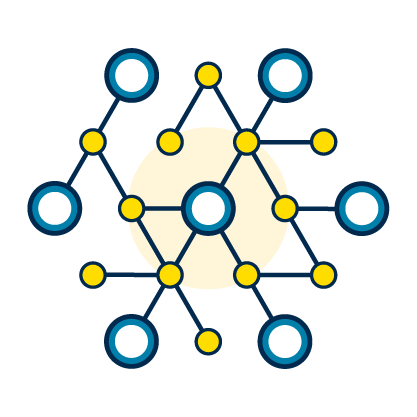
Self-organisation is how systems respond and adapt to local conditions without being directed by an overarching external control. Encouraging self-organisation can make systems more resilient.
It is this self-organising nature of complex systems that gives rise to emergent behaviour.
Emergent behaviour
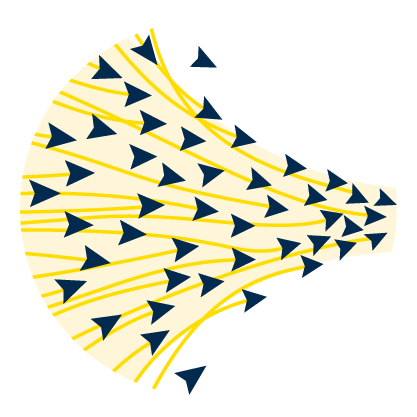
Complex systems behaviour is described as emergent. Behaviours can include patterns, outcomes or properties. They arise from the interactions of individual components within a system and they can be difficult to predict or influence.
Emergent behaviours (quality problem, safety incidents) are largely 'symptoms' of system structures, meaning the solutions to these problems lie in the system's design.
Non-linear
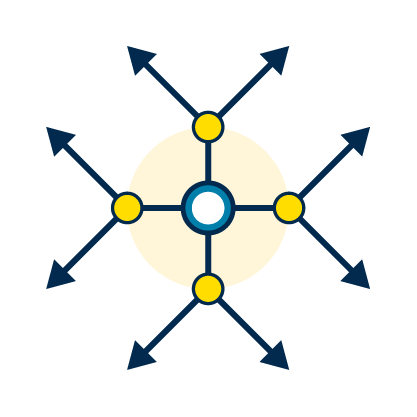
In simple (linear) systems, inputs often lead to predictable outcomes. Complex (non-linear) systems can be unpredictable and respond in different ways to inputs / change. A large change may have little effect, yet small changes can create large impacts.
Therefore, applying cause and effect logic in complex systems may do more harm than good.

Path dependence
This means that complex systems are shaped and influenced by their history and ‘path’ to the present and future. This needs to be taken into consideration when studying systems as their 'path' can influence how that system behaves to change. This can make scale and spread approaches difficult to implement.
Understanding the system's context is one of the keys to system improvement.
Distributed control
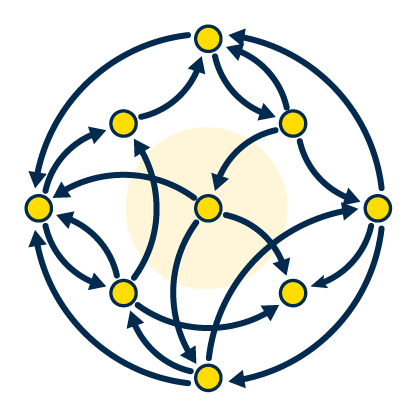
Distributed control in healthcare means that many different people and parts of the system make decisions based on their own rules and local context. When top-down policies don’t agree with the local rules and context, they can be rejected by the system.
Successful change in healthcare can happen when front-line staff have support to make changes that make sense in their every-day work.
Feedback loops
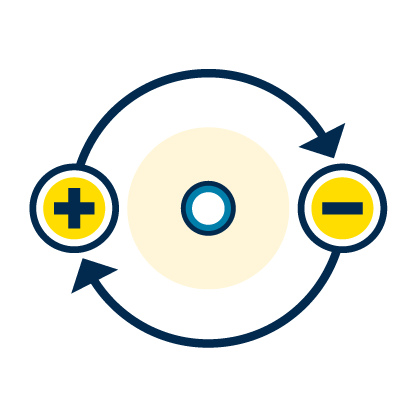
Feedback loops show how complex systems adapt and change over time. They happen when actions of a system affect the system itself.
Impacts can be:
-
Reinforcing, increase the behaviour, or
-
Balancing, counter or oppose the behaviour.
Fractal nature
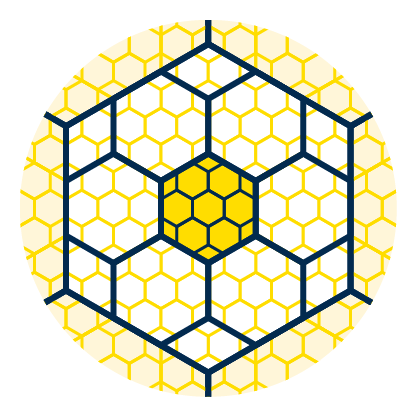
In systems thinking, fractal nature refers to how complex systems exhibit similar patterns or behaviours across different scales, for example, a health service vs a hospital ward.
Therefore systems thinking is appropriate to be used in complex systems, no matter how large or small they are.
In practice
Use systems thinking for all issues to explore interconnectedness and interdependence.
Support self-organisation by facilitating ground-up solutions (supported by leadership) as opposed to top-down mandated change.
Focus on redesigning the system rather than looking for solutions to system problems.
Be cautious of quick fixes or simple interventions as they may have unintended consequences.
Consider the history and context of systems and move away from a ‘one size fits all’ mindset.
Empowering front-line driven change will improve the success and sustainability of interventions.
Explore feedback loops to leverage change and avoid unintended consequences.
Quality improvement requires us to approach systems as a whole.
