Understanding your role
Moving from an individual contributor to a people-leader role is one of the biggest shifts you’ll make in your career.
- Individual contributor
- Leader of others
Individual contributor
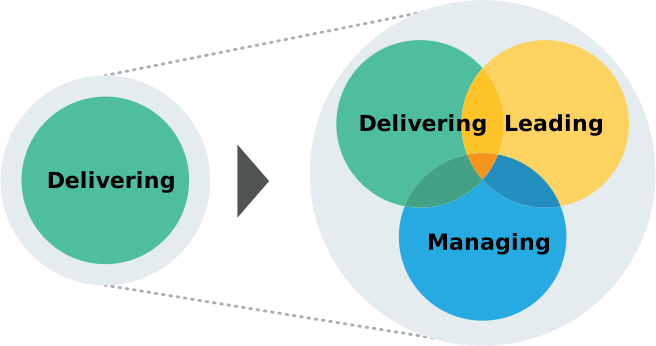
As an individual contributor you needed to deliver your own work through leading yourself, working with others and focusing on doing the best possible job. The skills you use to perform are based on your experience or expertise in a profession.
Leader of others
As a leader of others you are responsible for both managing and leading others to do their work as well as delivering your own work.
Effective leaders move from being self-focused to others-focused and value others’ success over their own.
Setting up to be a good leader by:
-
Getting to know your team members
-
Build your network – other line managers, your manager, services and facilities
-
Know where to get support and assistance
-
Become familiar with the systems and sites that can provide information and data
-
Understand the policies and directives associated with your role
-
Understand the procedures associated with your role
-
Know your delegation responsibilities – financial and Human Resources (HR).
Why it's important
Most new people-leaders feel uncertain or overwhelmed at first, but with time and support, they find their way. Queensland Health is committed to helping you make this shift because our patients rely on safe, quality care every day. As a leader – whether clinical, operational or administrative – you play a critical role in delivering care to our community.
You:
-
Influence team culture and set the tone for trust and respect
-
Create an environment where people enjoy coming to work
-
Balance your own work while supporting your team.
